
Can You Tile Over Existing Tile in Florida? What to Know
Can You Tile Over Existing Tile in Florida? What to Know
Yes, Sometimes: When Tiling Over Tile Makes Sense
Homeowners searching can you tile over existing tile Florida usually want to skip the mess, noise, and expense of demolition. The good news is that in the right conditions, it can be done successfully. When the old tile is solidly bonded, the surface is flat, and the extra height will not cause problems, a new layer of tile can be installed directly over it with excellent, long-lasting results.
The key phrase is the right conditions. Tiling over tile is not a shortcut that works everywhere, and a poor decision can leave you with cracked tile, hollow spots, and a floor that has to be torn out anyway. At Doxa Flooring Inc, our team evaluates every existing floor before recommending whether to remove it or build over it, because the honest answer depends on what is underneath.
How to Tell If Your Existing Tile Is a Good Candidate
Before any new material is ordered, the old floor needs a careful inspection. A tile installer looks at several things that homeowners can also check on their own:
- Bond: tap across the floor with a rubber mallet or the handle of a screwdriver. A solid sound is good. A hollow sound means the tile has lost its bond and will not support a new layer.
- Cracks: hairline cracks in a few tiles may be a surface issue, but cracks that run across several tiles often point to movement in the slab that will reflect through the new floor.
- Flatness: the surface should be flat within the tolerance for your new tile. Large format tile has tighter requirements than small tile, and deep grout lines may need to be filled.
- Condition of the surface: glossy glazed tile needs to be cleaned, degreased, and prepared so the new mortar can grip.
- Loose or missing pieces: every loose tile must be removed and the void filled and leveled.
If the floor passes these checks, tiling over it is usually a realistic option. If it fails more than one, removal is typically the smarter investment.
Florida-Specific Concerns to Consider
Many Florida homes are built on concrete slabs, and slabs can move slightly as soil settles and as temperature and moisture change. Cracks that are already present in your tile may be telling you the slab has a problem. If the cause is not addressed, those cracks tend to return in the new floor. An uncoupling membrane installed between the old and new tile can help absorb minor movement, and it is something we often discuss with homeowners in Bradenton, Sarasota, and Tampa.
Moisture is another factor. High humidity, plumbing leaks, and storm water intrusion can all affect the layers beneath a floor. If you see staining, efflorescence, mold, or lifted tiles near doors and exterior walls, the moisture source needs to be found and fixed before anything is installed on top. Covering up a moisture problem only hides it for a while.
Height is the final practical concern. A new layer of tile plus mortar can add roughly half an inch or more. That affects door clearances, transitions to other rooms, baseboards, toilet flanges, and appliance openings such as dishwashers. Planning for these details in advance prevents expensive surprises on installation day.
Preparation Steps That Make Tile Over Tile Work
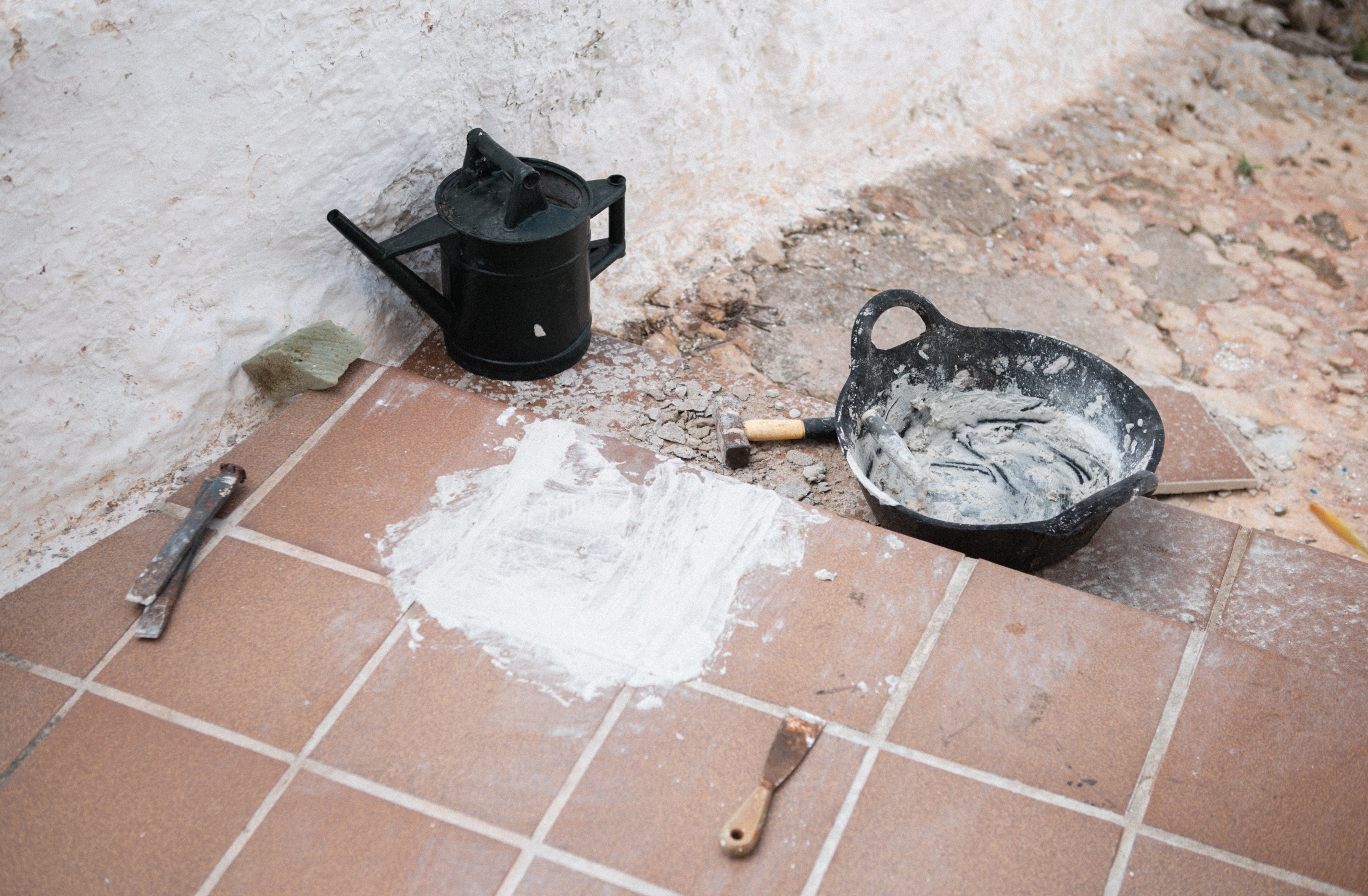
Success depends almost entirely on preparation. The old surface is deeply cleaned to remove soap film, wax, grease, and dirt. Glossy tile is typically roughened or treated with a bonding primer so the mortar can grab hold. Cracked or damaged grout is cleaned out, and low spots and open joints are filled with a patching compound to create a flat plane.
The mortar choice matters as well. A high-quality polymer-modified thinset designed to bond to non-porous surfaces is essential, and it must be applied with the correct trowel to achieve full coverage under each tile. Skimping on coverage is one of the leading causes of cracked and hollow tile later. Large format porcelain especially needs a flat base and proper back-buttering.
Finally, transitions and edges have to be addressed. Thresholds may need to be reset, baseboards removed and reinstalled, and cabinets or appliances checked for clearance. A careful installer plans these steps before the first tile is set.
When Removing the Old Tile Is the Better Choice
There are situations where we strongly recommend demolition. Showers, tub surrounds, and other wet areas are best rebuilt from the substrate up, because the waterproofing system needs to be correct and cannot be verified under existing tile. The same goes for floors with widespread hollow areas, recurring cracks, active moisture issues, or limited height clearance.
Removal also makes sense when you want a major layout change, such as moving to larger tile, adding radiant heat, or correcting an uneven slab. Yes, demolition adds cost and time, but it gives you a fresh start and often saves money over the life of the floor. We will always explain both paths and give you a straightforward recommendation, not a sales pitch.
Talk to a Florida Tile Professional First
Doxa Flooring Inc is a family-owned, owner-operated tile and flooring company founded in 2016 by Luciano and Joanna Soares. With more than 1,000 completed projects, a 4.7-star rating, and bilingual service in English and Spanish, we bring hands-on experience to every evaluation. As a labor-only installer, we focus on craftsmanship and giving you honest advice about what your floor needs.
Not sure whether your existing tile can stay? Contact Doxa Flooring Inc today to schedule an on-site assessment and get a clear recommendation for your home.